Showing posts with label automation. Show all posts

Friday, July 1, 2016

Postage Meters: An Inside Look at Business Mailing Technology

Postage meters and postage scales are perhaps the most crucial components to any company's mailing system. Postage meters and scale come in many different models based on varying levels of sophistication and output. Let's examine some attributes of each.

Your postage meter system handles to print postage amounts based on mail pieces according to the current rates and regulations of the Postal Service. Since these rates are usually estimated based on the weight of the package being shipped, it is necessary to have a postage scale to weigh packages and letters to figure the correct cost.

By utilizing a postage scale, you can eliminate the likelihood of extra and over payments that occur when you are supposed to affix additional stamps to mail packages due to lack of "proper change" so to speak or when indecisive of cost. Studies have indicated that savings to the average business can be up to 30 percent.
Postage Meters

Scale-Integrated Postage Meters

A number of digital scales have a direct relation to your postage meter, resulting in automatic recording of the postage amount. This is helpful when you often send mail of variety of weights and can also facilitate costs for other carriers, like Federal Express and United Parcel Service.

Spring scales on the other hand do not handle all the features of digital scales. If however you have fairly low volume and mostly ship just letter and envelopes, spring scales offer a reasonable solution, sometimes costing as little as $35 as opposed to a digital scale which can run upwards to a few hundred dollars. Scales can also be rented and a small digital scale will run you about $5 each month.

When it comes to service and support for postage meter systems, the meter itself does not require a service contract because the manufacturer is the owner as you merely lease it, and they are responsible for repairs. Prior to leasing a meter, be sure you understand how repairs will be handled, whether you must send it or will a technician come to your office?
Postage Mail Machines

Features & Components of Most Postage Meters

Most postage meters will offer the following features and components to help improve the overall mailing process.
  • Base: It is the seat on which mail is moved through a postage meter.
  • Postage scale: It weighs consignments calculating required postage amount. Interfaced postage scales automatically apply the calculated postage amount. Digital postage scales charge correct postage automatically.
  • Feeder: Your mails and packages run through feeders before being stamped on the postal mark by the meter. You can opt for manual, semi-automatic and automatic feeders. Automatic and semi-automatic feeders are more suitable for handling large mail stacks. Feeder come in different dimensions and their speeds vary from 15 to 270 letters per minute.
  • Sealer: They glue, moisten and seal mail envelop flaps. Sealers require comprehensive maintenance.
  • Stacker: Stamped mails are moved to the stacker or collection. Low-end stackers hold a few metered mails in a tray while power stackers move stamped mails onto a tray through a conveyor system.
  • Tape dispenser: Pre-cut and rolled tape dispensers allow you to fix tapes or postage strips on irregular shaped packages. Tape dispensers along with the base ensure proper placement and sticking of postage strips on packages.

Advantages of Postage Meters for Businesses

Postage meters are a vital asset for all types of businesses. They can help save time and money on postage, not to mention the labor invested making frequent trips to the post office. Some of benefits of postage meters are:
  • Easy stamping: With postage machines, businesses can print and pay postage without leaving the office. You don't have to stand in long queues at the post office to get shipments weighed and metered. You only need to make the trip to drop the consignments or you can arrange to have them collected from your office.
  • Easy management of all types of mails: Postage machines can take care of all kinds of mails
  • Parcel Post, Priority, Domestic First-Class, Express, International parcels, International First-Class etc. As it is very easy to print directly on envelopes, large volume of mails can be weighed and stamped speedily and correctly.
  • Cost savings: Postage meters always print packages with precise postage unlike the occasional case at post offices where precise postage is not available all the time or when you weigh the package on a scale and estimate the postage from a lookup table. Consignments are weighed on a scale on the meter and postage is calculated on that basis along with the type of mail and its destination.
Postage meters continue to evolve as some of the most technologically-advanced mailing systems. They provide a solid ROI for businesses that engage in high volumes of postage.

Friday, June 17, 2016

Top 5 Automation Systems for Packing, Shipping, & Logistics

At the end of every production process, the finished product has to be efficiently and functionally-packed and secured for shipping. However, the growing volume of smaller, more regular and frequent orders has challenged conventional means of storing, packing and shipping products, but it is also forcing companies to look at their logistics operations in ways they never considered necessary before.
Automation Systems


For this reason, automation systems are now the future of industrial and logistics automation. Some processes have been completely automated. This has the advantage of saving labor, but automation systems are also used to save energy & materials as well as to enhance quality, accuracy and precision.

This same code of automation systems, to reduce labor time spent on manual entry in the planning process of the movement of procured and sold products in the supply chain, also known as logistics system, helps lower costs and impact the end result, all while reducing error and enhancing overall customer service. In this article, we are going to have an in depth look at five automation systems that provide the greatest impact on packaging, shipping, and logistics processes.

Strapping Machines 

Strapping Machines are the perfect way to secure goods, packages, or cartons for safe hauling: quickly, efficiently and with nominal use of materials. Essential for many types of logistics and fulfillment warehouses, strapping machines are suitable for all sorts of materials, shapes and sizes. Cardboard boxes which correspond to the European packaging standards are particularly well-suited to strapping.

The strapping machine functions by pulling and fastening a band of plastic and metal around the products, thereby keeping them immobile during transport. Depending on the needs of the logistics company, there are you semi-automatic or fully-automatic strapping machines which enable you to reliably and efficiently bundle your packages, boxes, parcels or other items, or have them secured for shipping – all with maximum availability.

Cubing & Dimensioning Systems 
Cubing & Dimensioning Systems

Cubing and dimensioning systems have been central pieces of warehouse and logistics equipment for decades. They offer precise and real-time parcel size and weight data since they are equipped and integrated with software. This allows workers to store materials safely on racks, collect them on pallets, and then load them on trucks.

Many operators opt to use the new dimensioning and cubing technology systems and equipment because of their precision, dependability, and turn-key installation. Unlike the conventional cubing and dimensioning systems, these new automation systems are effective, convenient, cost effective and durable. Like mentioned above, the logistics company can integrate them with their business’s existing system (e.g. conveyor systems) and this helps reduce setup costs.

Automatic Box Cutter Machines

Automatic Box Cutter MachinesAutomatic box cutter machine is a technology in the logistics process which automatically opens boxes on a conveyor system or other “pass through” environment. These automation systems was invented because of a gap in automation technology which exists in large warehouses and distribution centers. Looking at few advantages of using an automatic box cutter machines, you can see the how their function is highly valuable in a variety of high volume industries.

The speed and accuracy of this system aid in numerous key areas. These include repacking mixed cases, opening and processing returns, and more. Since the machines are programmable and are completely safe to products, there is less product waste and you save more labor time on being cautious with a box knife. Therefore, besides increasing the speed and accuracy of workflow, the automatic box cutter machine also reduces strain and likelihood of injury on the personnel. From modular to intelligent you’ll find automation systems that engage you and suit your needs.

Applicators & Labeling Systems

Applicators & Labeling Systems
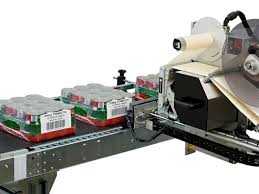
Automatic label applicators can rapidly apply pre-printed pressure sensitive labels to all sorts and sizes of products and packages. Each applicator and labeling system model is uniquely designed for addressing specific labeling requirements. Any of the automatic label applicator is matched with a labeling head and is capable of delivering repeatable label placement accuracy. These automation systems vastly improve the speed, accuracy and efficiency of your packaging line.

They help reduce labor costs, minimize operator fatigue and prevent label wastage. Applicator and labeling systems are generally cost effective, and simple to operate as well as maintain. They are widely used in the third-party logistics and shipping process in different industry segments such as cosmetics, fancy goods, gifts article, consumer products, agriculture, electronics and pharmaceuticals.

Conveyor Systems

Conveyor systems are available as part of the complete logistics system offering. They can transport goods vertically, horizontally, around corners, and also handle declines and inclines. However, market-leading automated conveyor systems range offer more than just optimal transportation. They join processes together, and help deliver and take away products – automatically, as well as on cue.

These automation systems can store products and packages until the next machine or person needs them, sort or merge the packages intelligently, and can facilitate several functions that add value to the order-fulfillment process, like packing and weighing. There are various types of conveyors including roller-type conveyors for cases, chain conveyors for heavy cargo, accumulation conveyors, and inclined belt conveyors. They are available in flexible designs to match and accommodate the features and installation requirements of customers’ loads.

Tuesday, April 5, 2016

Automation Technology: 3 Systems That Revolutionize Processing

Automation TechnologyWhen it comes to realizing greater efficiency and throughput, investing in automation technology is the best approach for various processing and manufacturing firms. Various types of distribution centers and warehousing businesses use technologically-guided procedures with a sole purpose of improving efficiency and reducing costs.


Automation is all about integrating new systems and technologies, installing applications, boosting labor resources, and utilizing online resources and programs to improve your business` operations. The automation systems below intended to profile three proven automation solutions for process and manufacturing operations.

Checkweighers

Checkweigher conveyor systemsCheckweigher systems are solely designed to both record and actual shipping weight and make a comparison of the expected weight to the actual weight. This comparison is crucial in creating an accurate order picking which will help you avoid costly mistakes. Furthermore, checkweighers involve the checking and analysis of devices including metal detectors and sorting of machines to aid in accurate checking of other features on the pack.

Apart from being reliable and fast, dynamic checkweigher conveyor systems in particularly are highly efficient since they give accurate results within a short period by use of electromagnetic force restoration system. On the other hand, cubing systems are designed to determine both weight and dimensions of cartons and pallets being shipped for distribution. Instead of using tape measures and rulers, with this cubing system enables you to get accurate results by just placing your item onto a cubing device.

Sortation Systems

Sortation Systems
Sortation systems are designed to increase shipping efficiency and accuracy in the processing and manufacturing operations. Sortation systems are designed to meet the growing demands for increased efficiency, smaller order sizes, and frequent shipments. These demands are aimed at boosting efficiency in all your distribution operations. Sortation is perfect for separating products from a conveyor line to a shipping lane, packing stations, palletizing stations and any other sortation applications.

Sortation machines involve the use of versatile systems that have the capacity to sort a vast range of product weights, sizes to any a number of divert lanes. Furthermore, integrated sortation technology incorporates the use of proven and innovative sortation products with high technology including soft touch and dynamic discharge compensation. Integrated sortation systems will help you to effectively analyze every application so as to create sortation system solutions that perfectly suit each client`s operation.

Print & Apply Systems

Print and apply systems are essential in process and manufacturing solutions to maximize productivity. These automation systems offer you the ultimate modular label coding system that perfectly suit your product line. With the option of using specialized solutions and standard configurations, print and apply systems can be easily integrated to meet all your needs with minimum hassle.
Print & Apply Systems


Furthermore, you are provided with automated print and apply systems for packaging, manufacturing and supply chain system applications.A print and apply system allows for easy operation by offering clear monitoring, easy navigation and operation, minimum downtime, improved performance, increased print speed, and robust design supports. The ease in operation will help a great deal in increasing print-head life, lowering material wastage and increasing uptime in the long run.

Process and manufacturing operations require automation solutions so as to boost efficiency and productivity. Therefore, with the above three proven automation solutions, be sure to enjoy a fast, reliable, and efficient process and manufacturing operations in your firm or warehouse business.

Thursday, December 31, 2015

Strapping Machines: Breaking Apart Today's Strapper Technology

strapping machine for sale
The most important job of a strapping machine is to ensure that users deliver goods to their customers safely. By not selecting the right strapping machine, no matter how effective your quality control is, if the product doesn’t get packed properly, then it won’t satisfy the customers need.

This article is intended to offer insight on various forms of strapper technology and how to get the perfect strapping machine specially designed for your application. But first let’s clear the confusion that exists between semi-automatic strapping machines and automatic strapping machines. These two are the basic types of strapping machines for sale, but we there are also other types that you will find on the market.

Automatic vs. Semi-Automatic Strapping Machines

  • Semi-automatic strapping machines: Semi-automatic strapping machines are ideal for low volume operations, backups or offline strapping. They are not very long, and their typical size is that of a small desk. Unlike the fully ones the semi- automatic strapping machines requires an operator, where he or she picks the loose end of a strap fed on the machine, and using his hand loops it around the package and feeds it to the other end of the sealing area. The machine then tensions the strap as per set tension.
  • Fully automatic strapping machines: Unlike the semi-automatic they do not require an operator, they allow hand free operation and the operation of strap process is usually by a foot pedal, or a push button a little bit pricier that semi ones. They are high-performance machines ideal for heavy duty use and the strapping time on them can be less than 3 sec.

Features to Consider When Choosing a Strapping Machine

There a wide range of features in today's semi-auto and automatic strapping machines for sale on the market. Some of the primary features you'll want to consider include:
strapper machine for sale
  • 1. Auto feed: without having this feature, strapping a package can be extremely difficult. But sometimes you do not need it if you are changing your coils ever month, but if you are doing it each and every day, then do not overlook this important feature.
  • 2. Loop Ejection: Loop ejects feature increase reliability and the production continuity. Without it, you will have to re-set the machine manually if there is any jam. If you have high volume operation this a feature that shouldn’t be overlooked.
  • 3. Size: it is important to size your strapping machine according to your package volume. It would be very wise and less costly if you choose the semi-automatic machine when performing low-volume operations. The semi automatic strapping machine might also prove valuable in the event of your fully automatic machine is down or jammed.
  • 4. Strap type:- Just like any other industrial equipment, a strapper requires a certain amount of maintenance. So make sure you use a good strap, one that is consistency in width and the gauge and one that has minimal curves. I find many machines problem resulting from the type of strap in usage.

There are other features like the strapping speed, the power supply and consumption and the strap width, thickness and length, all that should not be ignored.

There are huge selections of strapping machines currently on the market, some of the very brand new and some comes as second hand. Some people prefer going for the second hand because of the price factor, and if you decide to own a second hand strapping machine make sure it’s refurbished and fully working and, if possible, find one with parts and labor warranty.

If you use the above checkpoints when selecting the right strapping machine, you will definitely get encouraging feedback from satisfied customers.

Thursday, December 3, 2015

The Most Advanced Postage Meter Technology from Neopost USA

Postage Meters Neopost USA
The variety of postage meters on the market today makes it a daunting task to select which postage meter machine will work the best for your needs and budget. While you can't go wrong with Neopost USA's postage meter technology, the company makes so many models that it can be difficult to choose just one. Below we profile five the of most advanced postage meters from Neopost designed for high-volume mailrooms.

Neopost IM-6000

The Neopost IM-6000 presents an amalgam of simplified user-friendly operations, optimized production, maximum uptime and effective cost control .This postage meter consists of a 15-inch touch screen whose height can be adjusted, and can be adjusted to the left, to the right, backwards, forwards, upwards and downwards as one would desire.

Neopost IM-6000

The screen is illuminated by shades of blue that ease visibility of tasks and has prompts and conspicuous descriptive buttons that ease navigation. The postage meter can be further customized with a full keyboard and a remote label dispenser that can improve the efficiency of the postage meter and more detailed customization of mail pieces.

Further detailed specifications of the Neopost IM-6000 includes: processing speeds of up to 300 letters per minute and up to 160 letters per minute when the machine is in dynamic mode; 4 print modes namely the meter, permit, date stamp and seal only modes; it allows printing on a minimum envelope size of 3.5 x 5 inches, a maximum envelope size of 10 x 13 inches and a maximum thickness size of 5/8 inches; has a maximum of 15 job imprint memories; high speed internet connectivity through the local access network port that allows for coupling with apps such as Postal Rates App and Commercial Rates App that effect better mailroom management to your business.

Neopost IM-5000

The IM-5000 postage meter from Neopost USA presents ground-breaking mailing technology that increases its efficiency as well as productivity. The postage meter consists of 5.7-inch touch screen that can be rotated to the left, to the right, backwards and forwards. The screen is full-colour easing legibility of the screen. In addition, it has shortcut keys, menu prompts, smart functions and wizards that make it more ergonomic.

Neopost IM-5000


Just like the Neopost IM-6000, it can be further optimized with a full keyboard and a remote label dispenser. Further detailed specification of the Neopost IM-5000 include: an ultra-high capacity ink-tank with a maximum of 100000 imprints; a dual pump sealing system with a jet spray with up to 5 adjustment levels; 4 print modes similar to the Neopost IM-6000; it allows printing on a minimum envelope size of 3.5 x 5 inches, a maximum envelope size of 10 x 13 inches and a maximum thickness size of 5/8 inches; has a maximum of 15 job imprint memories; high speed internet connectivity through the local access network port that allows for coupling with apps such as Remote Diagnostic App and E-Services App.

Neopost IN-750

The Neopost IN-750 postage meter is as much powerful as it is a beautiful piece of machinery that can improve the efficiency of the mail room. It has a maximum processing speed of 175 LPM (letters per minute) and a dynamic rate of up to 110 LPM and can handle mail pieces of up to 70 pounds.

Neopost IN-750


The Neopost IN-750 is secured with pin code protection and up to fifty different users can set their passwords. The coloured intuitive touch screen, short cut keys, differential weighing, an optional keyboard and remote label dispenser make this meter more ergonomic. In addition, it has high-speed internet connectivity and enabled app functionality.

Neopost IN-600 AF

The Neopost IN-600 AF is among the most versatile, fastest and latest postage meters with a contemporary design. It has a sealer as well as automatic feeder.

Neopost IN-650 AF

Further specifications of the Neopost IN-600 AF postage meter include: a maximum processing speed of 110 LPM; up to 9 job imprint memories; an integrated scale capable of measuring of up to 70 pounds; it allows printing on a minimum envelope size of 3.5 x 5 inches, a maximum envelope size of 10 x 13 inches and a maximum thickness size of 1/3 inches; high speed internet connectivity through the local access network port that allows for coupling with apps such as Receipt App and TotalFunds App.

Neopost IN-700

The Neopost IN-700 is made up of a sleek and eco-fresh design and is among the more powerful postage meters around.

Neopost IN-700

The IN-700 from Neopost USA has the following features: a maximum speed of 140 LPM and a maximum of 75 LPM with dynamic scale; up to 9 job imprint memories; an integrated scale capable of measuring up to 70 pounds; it allows printing on a minimum envelope size of 3.5 x 5 inches, a maximum envelope size of 10 x 13 inches and a maximum thickness size of 1/3 inches; it has an intuitive, ergonomic and full-colour touch screen; automatic envelope feeding; high speed internet connectivity through the local access network port that allows for coupling with apps such as Receipt App and E-Services App.

Wednesday, October 7, 2015

Supply Chain Automation Technology: 5 Systems Revolutionizing The Logistics Industry

The technology used for warehouse distribution and order fulfillment is constantly changing. With such a demanding and challenging business model, it is important that today’s technology matches the needs of the business, workers, and the customers. Here are five innovative advancements in technology which includes the areas of in-motion cubing systems, automated checkweigher systems, cold seal packaging systems, RFID tags, and autofulfillment.

In-motion Cubing Systems

In-motion cubing systems are extremely important to the warehouse and shipping business as they determine the weight, volume, and dimensions of shipping packages. An advancement to this area are the in motion cubing systems from Walz. This innovative system specializes in dimensional scanning and weighing, which is ideal for conveyors.

Walz solutions are some of leading dimensioning system products in this area because they have experience with over hundreds of in-motion cubing systems all across the world. There are options for dynamic conveyor belts as well as static weighing, scanning, and labeling. The Walz in-motion package scanner is of the top cubing systems for conveyors. The system measures every item to determine the dimensional size and weight.

Automated Checkweighers

The second advancement in technology is in the automated checkweigher systems. This innovation is also from Wakz. The Walz checkweigher systems offer extreme precision when it comes to scaling.

This is an advancement because it is a far better system than the traditional load cells. There is also a food and drink option that comes with the ability to choose a metal detection. The checkweigher systems under the Walz umbrella also have extremely fast services which makes their systems more leading edge than the others.

Cold Seal Packaging

The third advancement in technology is in the cold seal packaging systems. One of the leading brands in this category is WalzEQ's cold seal packaging machines. This system has several specifications that are above the other cold seal packaging systems. One specification is a touch screen, which allows operators to make easier adjustments.

The Walz cold seal packaging machine has the material for the sealing head where both rolls form the protective pouch. Another is that the machine uses two Rolls of cold seal material that makes the pouch. In terms of the sealing head, the systems does the length cut and end seals all at once. The length for the products is also unlimited for feed models.

RFID Tags

The fourth advancement in technology is the RFID tags. Before the RFID tags were invented, monthly inventory counting was laborious. Each and every product total had to be counted and entered in manually. The RFID tags are barcodes that allow products to be scanned. This is a great innovation as it increases the accuracy and cuts down on time.

Autofulfillment Machines

The final advancement in technology is the autofulfillment machines. These machines combine with prior warehouse machines to pull paperwork once an LPN or SKU has been scanned in. With technology changing every day, these five innovations may soon be a thing of the past as more and more logistic warehouses start implement new and advanced technology into their supply chain management operations.