Wednesday, June 24, 2015

3 Revolutionary Surveillance Systems Redefining Security Monitoring for Businesses

We live in an ever more threatening world with criminal element of all kind feasting on the civil morality of society, Injecting grief and distress in victims of their sinister plots and plunders, leaving sadness and chaos their wake. We watch the stories on the news each night and sympathise, but is there a way to prevent these nightmare from happening or catch the evil doers before they dissolve into obscurity?

The answer is yes and various systems and methods have been used for decades to increase the chances of catching perpetrators before they strike or before they escape the scene of a crime.

Identifying a crime before it happens is possible with the right tools, expertise, and some amount of luck. Building a profile on a particular individual that displays signs of potential assailment is one way to catch a criminal before a crime is committed.

This involves meticulous monitoring of the area being protected, may it be a building or an entire city. Such mammoth undertaken is made possible by the advancements in modern surveillance systems which include but not limited to: digital IP surveillance, transaction surveillance and social network analysis.

Digital IP Surveillance Systems

IP Surveillance provides a modern alternative to analog video surveillance. IP surveillance uses an IP camera to record video footage which is then sent over an IP (Internet protocol) network.

This method provides numerous advantages over regular CCTV systems which includes; quicker search, improved convenience, higher quality and more durable content, also the ability to view real time video footage from any geographic location through the network. Banks and other organisation make full use of this surveillance method which is effective in not only catching perpetrators, but also acts as a deterrent with cameras in clear sight.

There are many digital IP surveillance systems coming out onto the market, such as Pelco, Arecont Vision, March Networks and Axis Communications, all of which you can find at SeicoSecurity.com.

Transaction Surveillance Systems

Transaction surveillance is the auditing of individual customer transactions within a financial organisation in order to identify fraudulent activities or terrorist funding. Companies use monitoring systems to identify potentially suspicious activities which are reported to the relevant authorities. The areas monitored are currency activities, funds transfers, monetary instruments sales, ATM transactions, significant balance change, nonsufficient funds and non-resident alien accounts.

Monitoring these activities helps to prevent criminals using the system to fuel their unlawful endeavours. Transaction surveillance can be an invasion of one’s financial privacy, but it is necessary for macro security in the banking sector. Unlike most systems that demand comprehensive surveillance system equipment, these are mostly digital based in the form of advanced software.

Security Media Security Monitoring (Social Network Analysis)

Social network analysis (also called social media security analysis) is the monitoring and filtering of vital information generated on social network sites like Facebook and Twitter to identify a pattern of interest to authorities. These patterns of interest are generated by criminals and terrorists who use social network sites for communicating with associates and search for potential recruits.

This is a fast growing problem and governments worldwide invest heavily in research involving social network analysis. Powerful data filtering systems capable of sifting through terabytes of information in seconds, search for keywords and phrases used on social network sites to identify wrong doers. There are many social network analysis and security solutions out there, such as Signal, and more are coming out every year. For a great introduction on social networking analysis, visit Orgnet.com.

The monitoring and surveying of various sectors of society helps to restrict the progress of unlawful activities and maintain confidence in the business community. It may be intrusive and even offensive but the benefits far outweigh the insults.

Monday, May 18, 2015

Load Sensor Technology Behind Truck Weighbridge Scales

Whether for mining sites, high-volume farms, or free-ways, heavy-duty weighbridge truck scales are built to handle an enormous amount of weight. For instance, truck weighing stations are usually fitted with these scales to ensure that the weight of the truck (and its load) is captured for variety of reasons (i.e. tax purposes, daily business operations, and ensuring that the weight falls within the safety guidelines.)


This weight is usually calculated through two measurements; the axle weight which constitutes the amount of weight carried by each axle and the Gross weight which is the combined weight of all the axles. Truck scales are usually built out of a combination of concrete and steel.

It's All in the Load Cell

To accurately measure the weight of a truck, these truck weighbridge scales usually use load cells to capture the weight. A load cell is simply a transducer or sensor which converts a force or load into an electric signal. This signal can either be a frequency change, a current change or a voltage change; all this does depend on the circuitry and the type of load cell that’s been used.


These load cells can be made using inductive, resistive or capacitive techniques. The most common load cell technology for truck weighbridge scales tend to be resistive; working on the on the principle of change of resistance in response to an applied load. In other areas they are termed as piezoresistive, which is something that changes in response to an applied squeeze or pressure.

Truck Load Sensor Componentry

The load sensors on most truck weighbridge scales are built using resistive bonded strain gauges. A strain gauge basically consists of wires which transmit a very mild electric current. The strain gauges can either be tension or compression based. A tension strain gauge is based on the slight change in shape of the cell that’s caused by the weight while a compression strain gauge is based on how much the cell compresses when some pressure is applied on it.

Usually 4 strain gauges are configured in a Wheatstone bridge configuration with 4 separate resistors connected. An excitation voltage of 10V is usually applied to one set of corners and the difference in voltage between the two corners is measured between the other 2 corners; at equilibrium, with no applied load, the voltage output is usually zero or very close to zero.

When the metallic member to which these strain gauges are attached is stressed by any application of force, the strain experienced does lead to a change in resistance in either one or more of the resistors. This small change in resistance does result in a change in the output voltage. This change, however small can be measured and then digitized after accurate amplification of the rather small milli-voltage signals to a slightly higher amplitude of 0-10V or 0-5V.

Weighbridge Scale Software

These readings can then be captured by appropriate weighbridge software and utilized accordingly. It is worth mentioning that most of these truck weighbridge scale load sensors come fitted with high level digital output formats such Wi-Fi, Bluetooth, USB and Xbee Wireless capabilities.

Software-integrated truck weighbridge load sensors allow users of the system to monitor the output on a PC with the help of appropriate weighbridge software and generate the requisite reports and undertake a wide range of analysis. This also allows for the storage of this data for future use.

Friday, April 17, 2015

Industry-Defining Truck Scale Technology of 2015

For many years, truck scales were cumbersome systems that were usually mounted permanently on a concrete foundation. But today, there are many different types of truck scale technology, such as portable (or movable scales) as well as in-motion scales.

The load cells are the key component used by a truck scales in order to measure weight. The load weight of the vehicle is calculated by first using truck scales to weigh the empty vehicle (for calibration) and later when it is loaded.

Now in 2015, there are many types of truck scales used today. They can be classified based on the technology used, their applications, and whether or not they are portable, semi-permanent, or fixed. Below are some of the most industry-defining truck scales on the market today.
  • On-board Truck Scales
  • In-motion Portable Axle Scales
  • Heavy-Duty, Steel-Deck Weighbridges
  • Portable Wheel Weighers
  • In-motion Rail Scales
  • Grain Dump Truck Scales (Farming)

Heavy-Duty Truck Scale Technology

Heavy-duty truck scales, such as weighbridges, can be surface mounted or they can be pit mounted. They are typically built from concrete or steel and are extremely robust in order to sustain the weight measured. Modern weighbridges use multiple load cells connected to an electronic equipment that receives the sensor inputs.

In case of semi-permanent scales the weight readings are recorded in a nearby office. Many modern weighbridge truck scales are linked to a computer running truck scale software. They are capable of additional features such as providing reporting or printing tickets.

Truck scales are used in various industries that manufacture or move bulk items, such as in agriculture and farming, garbage dumps and recycling centers, mines or quarries, household goods, bulk liquid and powder movement, and electrical equipment.

Easy-to-Use Portable Truck Scales

Portable truck scales can also be found in various applications around the world. They have lower frame work that allows placement on non-typical surfaces. These portable truck scale systems are designed to allow a simple low cost installation.

In order to install this scale systems is required only a very simple low profile shallow pit. Axle and gross vehicle weight measurements can be done when vehicles drive over the scale system in-motion.


 Examples of portable wheel weigher solutions are the AXW-45, 95 and 110 Series of portable axle scales by WalzScale.com. They are ideal for in-motion weighing, off road conditions and applications requiring weighing large vehicles.

The benefits of the in-motion portable wheel weighers are:
  • Removable ramps
  • Tough, durable, and dependable construction
  • In-Motion weighing (weighs truck loads while the vehicle slowly passes over the scale unit)
  • Weight terminal included with ticket printer

For those applications requiring tracking and managing a multitude of data advanced weight study software is also available. This software can be used for vehicle weight studies and tracking in one central database various payloads, vehicle weight, and tire load data.

The technological trends in the truck scale industry in the year 2015 show an integration of recent developments in load cell technology, an increase in demand for high performance scales, an increase in demand for automated weighing solutions, emerging of using wireless technology for load cells, and the tendency to use electronic scales rather than mechanical scales.

Friday, April 10, 2015

3 Portable Truck Scale for Weighing Heavy-duty Truck Loads

Truck scales are a necessity in any logistics, mining, farming, and waste management operations that demands heavy-duty weighing of truck loads. There are many types of trucks scales to use for these operations, and also for different types of trucks. Understanding the types and their pros and cons will assist you in purchasing a quality scale that you can use for many years.

Among the most popular of truck scales for sale are portable truck scales. Portable truck scales are mobile, easy-to-use, and more affordable compared to other types of truck scale systems. Below we showcase three of the most popular and effective portable truck scales for weighing trucks and other heavy duty vehicles.


Portable Axle Scales

This type of portable truck scale is considerably small, easy-to-use, and affordable. However, portable axle scales will only accommodate one axle at a time. You can use the scale to ascertain that the truck is not above the set weight limit for each axle as set for certain roads.

You can hardly use the scales to measure the entire cargo and also you can not use them to charge your customers according to the weight of load you have ferried.
Features of portable axle scales
  • Equipped with overload protection.
  • They can stand several tons of weight.
  • They are completely portable and you can use them in any area you find them suitable.
  • Can measure a large varieties of vehicles ranging from mining trucks to some farming vehicles.
  • They will occupy a little space due to their design.

Portable Weigh Pads 

Also known as the truck axle scales. Generally, they are light portable scales made to weigh individual wheels and axles to ensure the compliance with the legal weight limits. Many of the models will allow connectivity to over six wheels.

These portable truck weighing scales allow individual wheel weighing and combined axle weighing, which you can perform at the same time to increase weighing efficiency and accuracy. To attain weight accuracy you should have all the wheels on a level ground and on the same plane. That will avoid inadvertent weight transfers.

In-Motion Portable Truck Scales

Weigh in motion portable scales are capable of recording the actual weight of a moving truck. The scales will mostly be installed on free weighs specifically for weighing the semi trucks at weigh stations. The scales are advancement as the truck will not need to get into a standby for the weight recording as it was the case in the older static weigh stations.


There are many weigh in-motion truck scales you can use to ensure compliance with the set regulations and also analyze the vehicle while on the road. The scales in addition, offer a cost effective solution by monitoring the heavy duty tucks while traveling over the highway. They will also measure per axle weight or the gross weight while the truck is in the highway speed. The weigh in motion scale will measure the axle spacing to get the class of the truck and also will record the vehicle speed.

When searching for portable scales for weighing trucks, there are many things to consider. You should consider the scale with a certification from the relevant authority and also the right size. The other factors to consider include weight capacity, feasibility of axle scales concrete or steel plate deck options and pit or pitiless scales.

Wednesday, April 1, 2015

How GPS Technology Has Evolved the Third-Party Logistics Industry

The third-party logistics industry is undergoing a rapid transition due to the advances in information and communication technologies.

Advancement in information technologies has brought substantial benefits to logistics service providers, specifically third-party logistics (3PL) companies. The development and application of these technologies such as global positioning system (GPS) are especially important and helpful in transportation and logistics activities that are integral components in any supply chain system.


In this article, we discuss the application of GPS-based information technologies to optimize operations of companies providing third-party logistics service. We discuss how these technologies help to enhance the effective and efficient management of their businesses and analyze the interaction of GPS implementation and several key characteristics of the logistic distribution context.

Because of the wide range of business activities involved in the transportation process, logistics related costs account for a quite substantial share of the total costs for any company. In the past decade, other technologies such as enterprise resource planning and electronic data interchange systems substantially improved the efficiency of supply chain management. In this decade, the emergence of GPS improves logistics operation efficiency.

In recent years, GPS has been used in vehicles of logistics service providers. GPS is used for obtaining information with respect to the position, speed, and travel direction of vehicles. In addition, there are concepts and techniques to combine GIS, GPS, and other digital communication technologies to locate the position and velocity of vehicles.

The emphasis of the concept is on the importance of the connection with the central monitoring system. There have also been studies on the application of GIS and OR techniques in the problems of technician-dispatching and home deliveries and parcel delivery. in Korea. GPS is also important for geographic data collection, global positioning system based addressing, vehicle routing, and resource discovery.

GPS and related new computer systems and information technology have a huge impact on logistics distributions. We need to understand GPS usage and have a deeper understanding about the benefits and values generated by these technologies in logistic operations and provide analysis of why these benefits exist. For instance, improved just-in-time service, optimized delivery schedules, and routes are made possible by these technologies, real-time monitoring, and data transfer are obtained between dispatchers and drivers helps improve supply chain management.

Moreover, these advantages can also be extended and enjoyed by their costumers such that the entire supply chain operations can be optimized. Studies reveal important and critical issues during the application process of these new technologies. While some of the issues are inherent and closely related with the further development of these new technologies, others need stronger collaboration and support from logistics management partners and from other important players in the business.

Results confirm the potential of related technologies of GPS for enhancing operating efficiency and productivity, improving communication and relationship building, and facilitating collaboration and strategic planning of a firm and its supply chain. The results have to be interpreted cautiously and need to be validated with further extensive studies. Continued large-scale research should be planned and conducted to further explore broad range of business sectors.

Tuesday, March 10, 2015

The Role of IT in Advanced Logistics and Supply Chain Management

Information Technology (IT) is the study, creation, support, utilization and management of computer based information systems, especially computer hardware and software applications. IT is not limited to computers, with the current technological advancements in area of mobile and other handheld devices, IT is fast moving onto other forms of business and technology.

A supply chain on the other hand is a network of suppliers, subcontractors, and distributors used by a manufacturer to source for its raw materials, supplies and components. Logistics organizations store, transport and distribute work-in progress and supplies within the entire supply chain and also distribute the finished product to clients and intermediaries therein between. Thus, it follows that the integration of logistics operations and supply chain will not only reduce costs and improve efficiency but will also increase the competitive advantage of the organization.

How Technology Has Advanced SCM

A supply chain management (SCM) system is therefore concerned with the flow of information and products between the member organizations within the supply chain. Recent advancements in technologies have ensured that organizations can avail this information quite easily, thereby greatly reducing the cost of information. With integrated supply chain solutions, the flow of information and materials is usually bi-directional.

Today’s advanced IT systems have enabled organizations to leverage some turnkey logistics and warehouse management, and packaging systems as well as custom Electronic Data Interchange (EDI) solutions at a fraction of the previous price. This development, where the supply chain system is inter-organizational has three very distinct advantages.

First and foremost, there is a drastic cost reduction in the route to market, distributorship and production cost.

Secondly, the productivity of all the organizations in the supply chain is bound to improve and lastly there is bound to be a drastic improvement in the development and execution of product and market strategies.

Facilitation of Logistics Collaboration

For many systems, there are at least five basic levels in the system where logistics technology can enable high-levels of collaboration. The first level is at the remote input/output node where a member can participate from a remote location and interact with application system.

The second level is where a member of a fluid supply chain shares a single application such as an order processing system or inventory query with the application.

The third level is where a member of the supply chain develops and shares a network which links it to other participants with whom it has a business relationship.

In the fourth level, a partner organization may opt to develop and share a network with different applications which can be used by other members to make queries, place orders, check stock levels etc.

The fifth and final level is where a member decides to become more of data processing or communications utility and integrates any data coming from other participating members in real time and avails it when required to do so.

Next-Level Supply Chain Solutions

Solid supply chain solution providers choose the level of IT that best fits their clients' needs and requirements and will not overstretch or overburden their networks or lead to instances of information overload.

Another huge area where IT has become a facet in supply chain management has been in the integration of Electronic Data Interchange (EDI) into most supply chain management systems. EDI refers to the computer to computer exchange of business documents in a standardized format.

Through the use of EDI, supply chain partners are able to overcome the exaggeration and distortion usually prevalent in supply and demand set ups by simply improving technologies available so as to allow for real time sharing of actual supply and demand information. This not only improves customer service through limited stock outs but is also cost efficient, improves the billing process and enhances productivity for all the players or partners involved.

Friday, March 6, 2015

Industry Advancements With In-motion Weigh Scale Technology


In-motion weigh scales are devices that are designed to measure the full weight of a vehicle as it moves through the measuring site (or in most cases, passed over the scale.) This advanced kind of weigh scale system does not require vehicles to come to a complete stop. Most in-motion scales only require the vehicle to slowly pass over the unit to make accurate weight calculations.

This technology is very useful because it allows vehicles to keep moving, helping operations increase throughout in their weighing processes. As a result, in-motion weighing technology is being integrated on many different applications, spanning from portable truck scales (or weigh pads) to in-motion rail scales on train track.

The Technology Behind In-motion Weigh Scales

The technology that is applied to these devices is high-end technology. Its sensors, primarily made of quartz crystals and placed on ground level, sense only the normal force that acts on the sensors (i.e. the force perpendicular to the ground, vertical force). Thus, the speed and the friction are not measured, leaving space only for the vehicles weight.

The quarts apply some electric charge that is proportional to the vehicle’s weight force. Through the use of physics, scientists have managed to form a formula to calculate the weight using that technology. But weighing in motion (WIM) devices are not all made of the same technology. There are several kind of WIM units.

  • Laser system WIM devices - They basically measure the displacement of the rail as the vehicle moves through it. Through some calculations they manage to calculate the weight.
  • Load cell system WIM units - They calculate the weight of the vehicle by measuring the constriction of the strain in the load rather than the rails.
  • Fiber optical measuring WIM devices - These systems measure the change of light ray illumination that is primarily produced by bending.

Applications of In-motion Weighing Scales

Below are a few of the most common applications of in-motion weighing scales:

1. This technology can also measure train’s weight. Otherwise known as in-motion rail scales, these simple systems are deployable within 30 minutes and requires no maintenance. The revolutionary and enhanced algorithms that are encompassed in the WIM’s software allow for a very accurate measurement. In-motion rail scale systems allows for a very quickly and accurate measurement of rail assets.


2. Additionally, this technology is very useful in highways. This technology allows the measurement of vehicle’s weight that pass through a certain place without stopping the traffic. The device will detect the vehicles that have broken the regulations and will automatically notify the officers in charge of the vehicle’s location. Then, the officer will take care of the problem.

3. Another use of this technology is in-motion on-board scales. There are thousands of loaded trucks that send and receive supplies daily. All of them must be measured, a process that takes time. But, thanks to the innovative WIM on board scale technology, it now takes much shorter time.

These devices are implemented within the truck, conveyor belt, or any other kind of equipment, and the sensors wirelessly inform the software about the weight of the products. This saves time and money as well. Most of these on-board scale products are cost efficient. Their price ranges from several hundred to a few thousand dollars.

4. Lastly, this technology is getting implemented in airports as well. While the plane moves through the sensors, they measure the weight and compare it to the pilot’s log in order to make sure that there is enough fuel to reach the destination. This saves lots of time.

Friday, February 20, 2015

The Most Advanced Bank Security System Technology

Considering the sensitive nature of information and assets a financial institution withholds, banks are one type of organization that have a very high need for security. In today’s digital world, banks are not only protecting their physical assets but their data and intelligence property too.

To ensure safety and protection of assets, most banks invest in advanced security systems like IP surveillance systems, access control systems, bank security equipment, and much more.

Access Control Systems 

Access control is described as the selective restriction to a place or a resource. In the past, locks were used as the mainstream mechanism for access control. However, they had several limitations with a major one being unauthorized copying of keys. A lock is perceived as a physical barrier to a room. Anyone who has the key to it can access the room at any time unless they are intercepted by security personnel.

A reliable access control system and especially one designed for such vulnerable places like a bank should be selective of people who are allowed to enter or exit, rooms they can enter and when they are allowed to enter. As one of the most standard forms of bank security systems, advanced access control systems take care of this by using computers to solve the limitations of a traditional lock. People access rooms using biometric data like fingerprints or other credentials like a workplace card.

This bank security solution is programmed to read this data and allow access accordingly. It then keeps a log of all entries and exits. Since the systems are intelligent, they can bar access to employees after working hours depending on hierarchy. The bank’s security personnel can also bar access to just a single employee if they have been fired or if they raise any kind of suspicion. A log of all entries and exits is kept to help with investigation should there be a security breach.

Important to note too is that access control systems selectively allow only certain staff to high risk rooms. For instance, the control system can be programmed such that only the bank manager is allowed access to the vaults.

IP Surveillance Systems 

An IP surveillance system is mostly used for surveillance of digital activity, such as online or computer-based transactions. Unlike analog CCTV cameras, IP surveillance systems are capable of sending and receiving data via a computer network or the Internet. This type of IP surveillance system is favored by most banks for its several benefits. Or find this type of surveillance system at suppliers like SeicoSecurity.com.

For one, its security quality is superior implying that the bank’s security personnel will find it easier to monitor changes in images. Such convenience paves way for quick decision making which is paramount to protection of digital resources, property and people. Other benefits presented by this kind of surveillance are inclusive of easy installation, scalability and cost effectiveness.

An IP surveillance system recordings can be accessed from a remote area via the Internet. This is convenient putting it in mind that staff members responsible for viewing the surveillance videos are not necessarily required to do it on site. In addition, this type of camera is intelligent and capable of triggering an alarm if it becomes suspicious of foul activity.

Friday, December 12, 2014

Portable Weighing Scale Technology for Heavy-Duty Trucks

From mining to agriculture, trucks need to be weighed in almost any industry that require load transport. Although fixed truck weighing scales are most vastly used for high volume applications (i.e. logistics and shipping operations), sometimes more versatile and simple truck scale systems offer greater functionality and efficiency.


Portable truck weighing scales are more and more popular because of the massive advantage they have over fixed scales: mobility. Portable truck weighing scales usually are designed using one of two common types of technology: Load Cell System and Bending Plate System.

Load Cell System 

Load cell is the most common and popular method used in portable scale’s functionality. Each cell is made of steel or such strong materials and they are accompanied by straining gauges that transmit electrical currents.

Whenever trucks pull over the cells, the amount of current that runs through the gauge changes and that change is interpreted by a junction. The difference between the primary and the changed currents determines the weight.

Bending Plate System

Although bending plate truck scale’s working principle is quite similar to the load cell scales’, they use plates instead of cells. When a truck pulls onto these plates, the straining gauges attached to them calculate the amount of stress being applied on each plate. This in turn determines the amount of weight needed to produce the determined stress.

There is another type of portable truck weighing scale system used in portable scales but it is highly uncommon. These scales are called piezoelectric scales and they use conductive material wired with sensors to weigh trucks.

Benefits of Portable Truck Weighing Scales


The benefits that AgWeigh's portable truck scales for sale have over fixed scales are clear but let us take a better look at them below:
  • The most obvious and attractive benefit is their mobility. Today’s industries are all about moving fast. Failing to keep up with the speed is enough to ensure steep falls in profits. With these scales any truck can be weighed anywhere and at any time as they can be carried around and set-up at will.
  • These scales are lightweight so they are easy to carry around. There is no need to attach an extra trailer to carry it around. The assembly process is also very simple and does not take more than a few minutes to make them usable.
  • They can literally be used in any kind of surface. Especially designed to be used in rugged surfaces, they do not require completely flat and smooth places to function properly.
  • Portable truck scales do not need any kind of special maintenance. Regular servicing is enough to ensure years of functionality.
These benefits together can make a company more efficient in terms of time and profit. Depending on the company’s management skills, this efficiency helps in capturing a loyal portion of the total market as well.

Portable truck weighing scales from companies like PayloadPros.com offer all the functions offered by a fixed scale while keeping the service mobile.

Monday, November 10, 2014

The Technology Behind the Walz Load Scanner

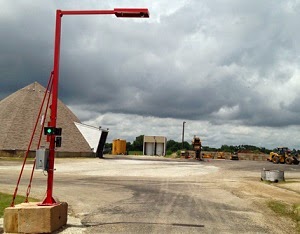
The company that introduced one of the most advanced pieces of load scanner technology on the market is Walz Scale. This load scanner system is designed to provide monitoring and reporting of 3D generated images and data from scanned truck beds as they pass through the scanner.

The system uses the latest technology for load scanning and payload management, enabling real time tracking and management. Below we go into great detail about the technology, functionality, feature, and benefits of the load scanner system from Walz Scale.

Features of the Walz Load Scanner System

The volumetric load scanner from Walz comes with features designed for companies with fast throughput and high volume operations. They are able to monitor the load capacity of hauled materials by using an automated system that provides real time measurements of load capacities for in motion trucks.


The system first scans the empty trucks and then scans them when they are loaded and calculates the actual load capacity. The system uses modern technology to load imagery logs for every truck and to provide a multitude of reporting.
  • Capability for In-motion load scanning
  • Volumetric 3D imagery for truck beds for sufficient monitoring
  • Simple setup of the software platform
  • Capability to take and store high definition load images
  • Low maintenance technology

Technology of the Load Scanner

Load scanners are able to provide high definition 3D load images in order to maximize productivity. The load images provide additional benefits such as monitor spillage, manage load position, monitor carry back, and material compaction analysis.


The systems include a 3D laser scanner, a PC or a laptop, and mounting hardware. The volumetric load scanners come with a user friendly load management software that provides users with real time data logs of the in motion trucks on transit.

 The load scanner can be also integrated with a RFID or a video vehicle recognition system. That provides further automation e tools that allow for un-manned operation and maximize the vehicle throughput to your operation.

The load management software developed by Walz Scale uses a software platform called Payload Pro. The load management software provides real time data and all the tools needed to manage your truck loads. The customized reporting capabilities are enable your system to meet your operation requirements.

The system will automatically generate load tickets that can be emailed, printed, or uploaded to a cloud account. The load tickets can include the following information.
  • Load volume
  • 3D load Image
  • Gross vehicle weight
  • Load net weight
Load scanners can come in portable systems and mobile configurations. These portable units are suitable for applications that require portability, such as road construction projects. Learn more about the Walz load scanner by visiting LoadScanner.com

Load Scanner Advantages for Payload Management

Compared with other load scanner systems, the load scanner designed by the company Walz Scale offers a very affordable solution payload management. Installing a load scanner is a cost effective way to manage your payload as it is relatively cheaper than the cost of weighbridges.

Other advantages of installing a volumetric load scanner for payload management are:

Accurate Load Volume Calculations

Unlike other systems used for payload management, the Walz load scanner provides very accurate load volume calculations that will minimize any uncertainties and variables in load variation, moisture content and compaction. The load scanner provides accurate load volume calculations without the use of old school methods or simple guessing.

Flexible and Durable

The Walz load scanners are built respecting the highest quality standards and they can withstand decades of use in production, mining, and construction operations. The Walz load scanners can be installed easily on any adequate haul road, access driving, or local scanning site

Reliable Functionality

The Walz load scanners provide reliable and dependable performance, even in extreme conditions and in the most remote environments. A load scanner could last for years with minimum maintenance and without the need of scheduled calibration and servicing.

Optimized Efficiency

A load scanner system could be easily installed on the site and become operational on the same day. Once in operation, the system can efficiently make calculations in just a few seconds and by using the advanced software solutions the data can be easily accessed.